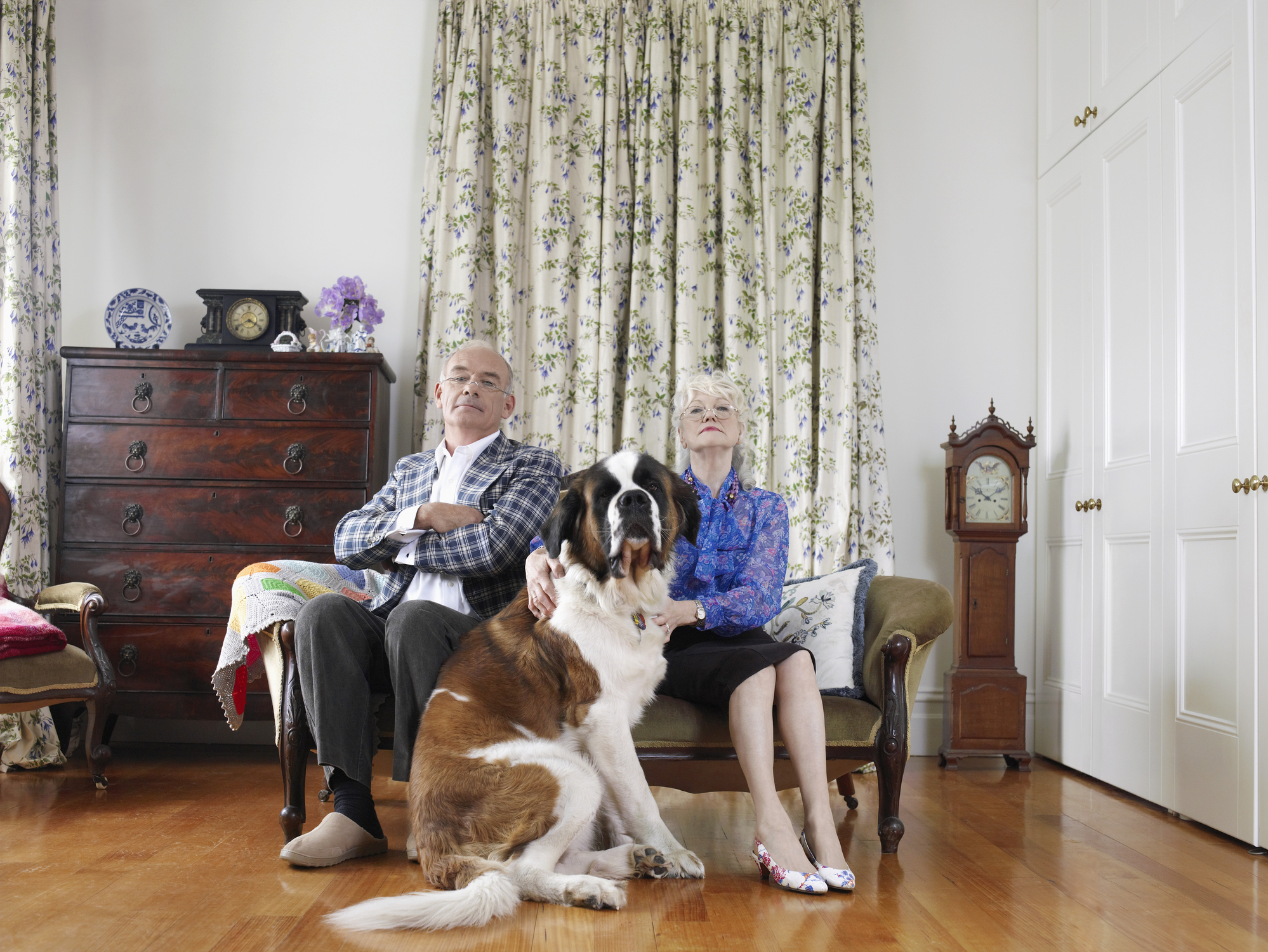
“Our perceptions about how ageing happens to ‘others’ is getting in the way of us acknowledging and framing our own advancing years and it is inhibiting our ability to get on and make the most of it.”
Why blog about ageing?
At social events during the noughties, I so often found myself in conversations with new people who were somewhat surprised to discover what I did for a job. For eight and a half years I edited a bimonthly magazine and news website called Australian Ageing Agenda. When asked the ‘so, what do you do, Keryn?’ question, I’d usually start by saying that I was a journalist and editor, but go on to say exactly what it was that I did. I used to say in the abbreviated version, stating the obvious I guess, “it’s all about ageing issues in Australia.”
The responses from people did vary a bit. Some were moderately interested, often because they had parents or relatives who were having some age-related health problems or moving to retirement villages or aged care homes and saw me as a potential source of useful information. Many people made polite noises and clearly felt sorry for me. “Mmmm, well, that’s certainly a very topical topic… none of us is getting any younger I suppose. Er… if you’ll excuse me, I just need to visit the bathroom.”
More than once I felt people made a negative assumption about my skills, assuming I’d been forced to take some awful B-grade job option out of desperation. I mean, why would anyone actually choose to write about old people and ageing and dementia and death and all those depressing topics when there were so many more interesting topics to write about? [“Why don’t you write about something cheerful,” my own mother said on more than one occasion.]
If the conversation proceeded, people would often be surprised to find that I actually loved the job and loved the topic. Sometimes I would get them thinking about things they’d never considered before and they’d begin to see why.
The big self-delusion
What I learned quite quickly in this role, but took a little while to really process and articulate, was that for most people ‘ageing’, particularly ageing anywhere beyond say, 65, was at best an abstract concept. Which is to say, while most people have some understanding of ageing issues, some personal family experiences, some observations – usually negative – about ‘being old’; they don’t often relate any of these concepts to themselves.
It’s a curious thing. Yes they could grasp that, all going well, they would inevitably at some point become ‘old’, though at what age or in what circumstance that might occur was less clear. Most of the people I have talked to about ageing over the years, including many whose careers and livelihoods depend on it, don’t in their conscious minds think it will really happen to THEM. Or at least not in the way that it happens to ‘others’ and this is where the problem lies.
Unhelpful ways of seeing ageing
Our perceptions about how ageing happens to ‘others’ is getting in the way of us acknowledging and framing our own advancing years and it is inhibiting our ability to get on and make the most of it.
There are two dominant ‘discourses’ on ageing in contemporary western society. The dominant one conceives ageing in terms of deficits. Scholars refer to it as the ‘deficit model’ and it’s characterised by disability, loss, isolation. If you hang around the aged care sector it’s easy to see how this framework can come to crowd out other perspectives.
The other popular discourse on ageing is a kind of extreme response to the first one. It’s about age-denial. Frequently it is associated with celebrity and increasingly it is linked to the burgeoning anti-ageing medicine industry whose business lies in nips, tucks, plumps and paralysis to obliterate or at least reduce the physical evidence left on your body by the passage of time. [Wendy Harmer from the Hoopla had a nice big rant about this, referencing Madonna’s video about her new skincare range.]
Putting things in perspective
The problem is that for the great majority of us, neither scenario really fits. Despite all the press given to diseases of ageing, aged care, dementia and lonely deaths, MOST people stay living in their own private dwelling until ‘the end’.
In the last Australian census (2011), 94 per cent of people over 65 years of age were living in private dwellings (which includes retirement village units). Only six per cent of people aged 75–84 years and 26 per cent of people aged 85 years and over were living in ‘non-private dwellings’, the majority being in aged care facilities but some in hospitals, prisons and other institutional environments.
At the same time, MOST people never looked like (or lived like) Jane Fonda or Robert Redford in their youth so have little real hope or even aspiration to be the sexiest septuagenarian on the block.
What is lacking in discussions about ageing is the sensible, practical middle ground. The road most travelled. If we’re all doing it then we’d best get on with making the most of it. As my pin-up boy of gerontology, Dr Alexandre Kalache, says “there’s only one alternative to ageing but there are many alternatives to ageing well.” This is indeed the age proposition.
I hope to share ideas, stories and experiences about these many alternatives in this blog and I hope you will share in this conversation. It’s only just begun and it’s actually going to be fun!
 Keryn Curtis at work